
 USA,
USA,  UK,
UK,  Europe,
  Australia,
  Hong Kong and
  Japan.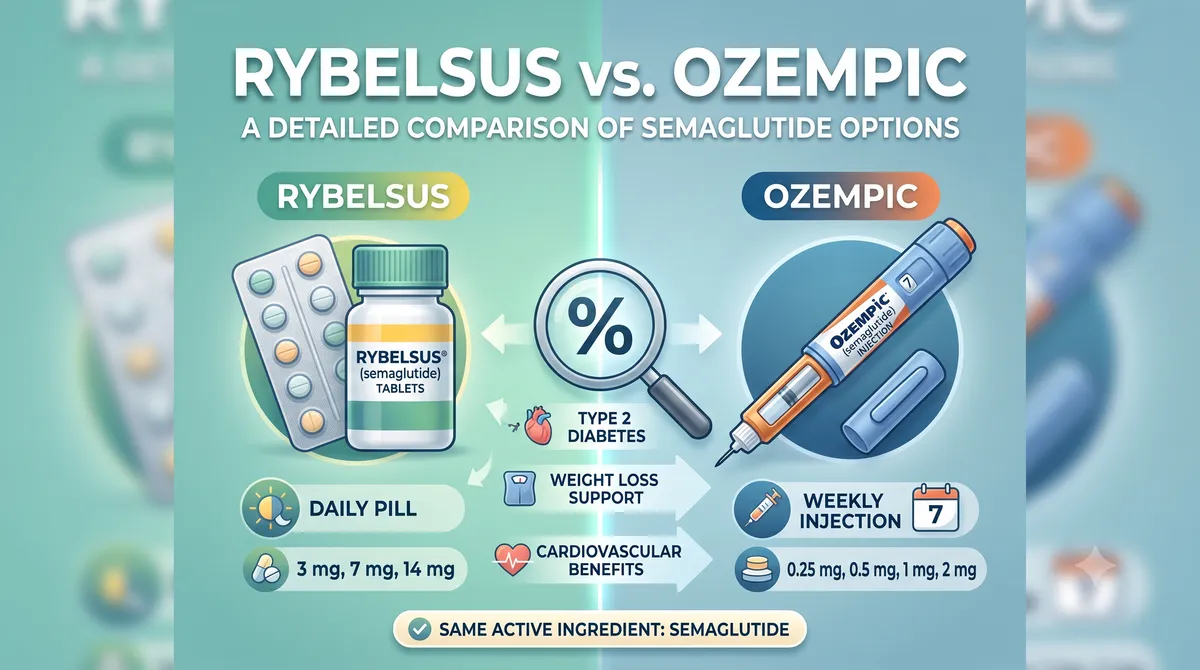
For individuals navigating type 2 diabetes management, selecting an effective treatment strategy is a vital milestone toward maintaining optimal glycemic health. While injectable therapies have traditionally dominated advanced care plans, the emergence of oral alternatives has drastically reshaped patient choices.
Two of the most widely discussed treatments in modern diabetes care are Rybelsus and Ozempic. Because both medications share the exact same active pharmaceutical ingredient—Semaglutide—they function in similar ways within the body. However, they differ significantly in their delivery methods, dosing schedules, and administration rules.
Here is a detailed breakdown comparing Rybelsus and Ozempic to help you understand which option might align best with your health goals.
The Active Core: How Semaglutide Works
Developed by Novo Nordisk, both Rybelsus and Ozempic utilize Semaglutide to improve blood sugar control in adults with type 2 diabetes. As GLP-1 (glucagon-like peptide-1) receptor agonists, they mimic a natural metabolic hormone in the body to regulate blood sugar levels through three biological pathways:
- Optimizing Insulin Release: Signalling the pancreas to produce more insulin when blood sugar rises.
- Suppressing Excess Glucagon: Prompting the pancreas to release less glucagon, preventing the liver from dumping unnecessary sugar into the bloodstream.
- Slowing Gastric Emptying: Delaying digestion to prevent sharp post-meal blood sugar spikes while encouraging a feeling of fullness.
Neither medication is an insulin replacement, and they should not be used to treat type 1 diabetes or diabetic ketoacidosis.
Key Differences: Rybelsus vs. Ozempic
The most substantial differentiator between these two medications is the method of administration and how frequently they must be taken.
| Feature | Rybelsus | Ozempic |
| Form | Oral Tablet (Pill) | Subcutaneous Injection |
| Frequency | Once Daily | Once Weekly |
| Food Restrictions | Strict rules (Must take on an empty stomach) | Flexible (Can take with or without food) |
| Primary Indication | Type 2 Diabetes Management | Type 2 Diabetes Management |
| Cardiovascular Benefit | Approved to reduce MACE risk in high-risk patients | Approved to reduce MACE risk in patients with established heart disease |
1. The Delivery Method: Pill vs. Injection
- Ozempic (The Weekly Injection): Ozempic is administered once per week via a pre-filled, single-use subcutaneous injection pen into the abdomen, thigh, or upper arm. Because the injection bypasses the digestive system and goes directly into the body’s tissues, it absorbs highly efficiently, allowing a single dose to last a full seven days.
- Rybelsus (The Daily Pill): Rybelsus is the first daily tablet of its kind, offering a highly effective alternative for patients who prefer avoiding needles or are unable to self-administer injections. Because oral semaglutide is less readily absorbed through the stomach lining, it must be taken every single day to maintain consistent levels in the body.
2. Strict Administration Rules for Rybelsus
While Ozempic injections can be administered at any time of day with or without food, Rybelsus demands absolute adherence to specific clinical administration rules to ensure optimal absorption:
- Take on an Empty Stomach: The tablet must be taken immediately upon waking up in the morning.
- Limit Water Intake: Swallow the pill entirely whole with a small sip of plain water only (no more than 4 ounces). Taking it with other beverages or too much water will severely impair absorption.
- Wait Before Eating: You must wait at least 30 minutes before eating, drinking anything else, or taking other oral medications.
Dosing and Titration Schedules
Because oral absorption yields a lower percentage of the active molecule into the bloodstream compared to a direct injection, the nominal doses for Rybelsus tablets are much higher than those for Ozempic injections. Both medications utilize a structured titration path to allow the digestive system time to safely adjust.
The Rybelsus Structured Titration Path:
- Rybelsus 3mg (The Initiation Phase): Taken once daily for the first 30 days. This baseline dose introduces the molecule gently to reduce severe stomach issues and is not intended for long-term glycemic control.
- Rybelsus 7mg (The Standard Maintenance Phase): After the initial 30 days, the dosage is increased to 7mg once daily, where active blood sugar lowering and A1C reductions typically become evident.
- Rybelsus 14mg (The Maximum Glycemic Phase): If additional blood sugar control is required after spending at least 30 days on the 7mg tier, a provider may elevate the daily intake to the maximum 14mg tablet.
In comparison, Ozempic typically starts at a weekly dose of 0.25 mg for the first 4 weeks, escalating to maintenance levels of 0.5 mg, 1.0 mg, or a maximum of 2.0 mg per week depending on patient needs.
Side Effects and Safety Protocols
Altering metabolic and vascular pathways can naturally result in secondary reactions as the body acclimates to a GLP-1 receptor agonist. Because they share the same active ingredient, the side effect profiles of Rybelsus and Ozempic are very similar, with the exception of localized injection-site reactions (like redness or swelling) unique to Ozempic.
Common, Mild Side Effects:
Most side effects are gastrointestinal, mild to moderate in severity, and tend to dissipate within a few weeks of starting the drug or ascending a dosage tier:
- Nausea and vomiting
- Abdominal pain or discomfort
- Diarrhea or constipation
- Decreased appetite and secondary weight loss
- Upset stomach, bloating, or excessive gas
Rare but Serious Medical Risks:
Seek immediate emergency medical attention if you display signs of severe underlying conditions, such as Pancreatitis (severe, persistent upper abdominal pain radiating to the back), Dehydration/Kidney Complications from excessive fluid loss, Changes in Eyesight (diabetic retinopathy complications), or Severe Hypoglycemia if combined with insulin or sulfonylureas.
Critical Boxed Warnings:
Both medications carry a Boxed Warning regarding the potential risk of thyroid C-cell tumors based on rodent studies. Anyone with a personal or family history of Medullary Thyroid Carcinoma (MTC) or Multiple Endocrine Neoplasia syndrome type 2 (MEN 2) must avoid these treatments completely. Additionally, these medications are contraindicated during pregnancy and breastfeeding.
Prioritizing Your Long-Term Health Strategy
Ultimately, choosing between the oral convenience of a daily pill like Rybelsus or the weekly schedule of an injection like Ozempic comes down to personal lifestyle preferences, medical history, and clinical goals.
Introducing any semaglutide regimen into your routine demands customized medical supervision. A qualified doctor will thoroughly review your comprehensive health history—focusing closely on kidney function, pancreatic health, and existing drug interactions—to confirm which choice safely aligns with your wellness goals. Talk to your healthcare provider today to evaluate if starting a structured titration path is the right choice for your type 2 diabetes management.